Upcoming North Carolina Tournaments


Showing posts with label Painting. Show all posts

Friday, July 8, 2011

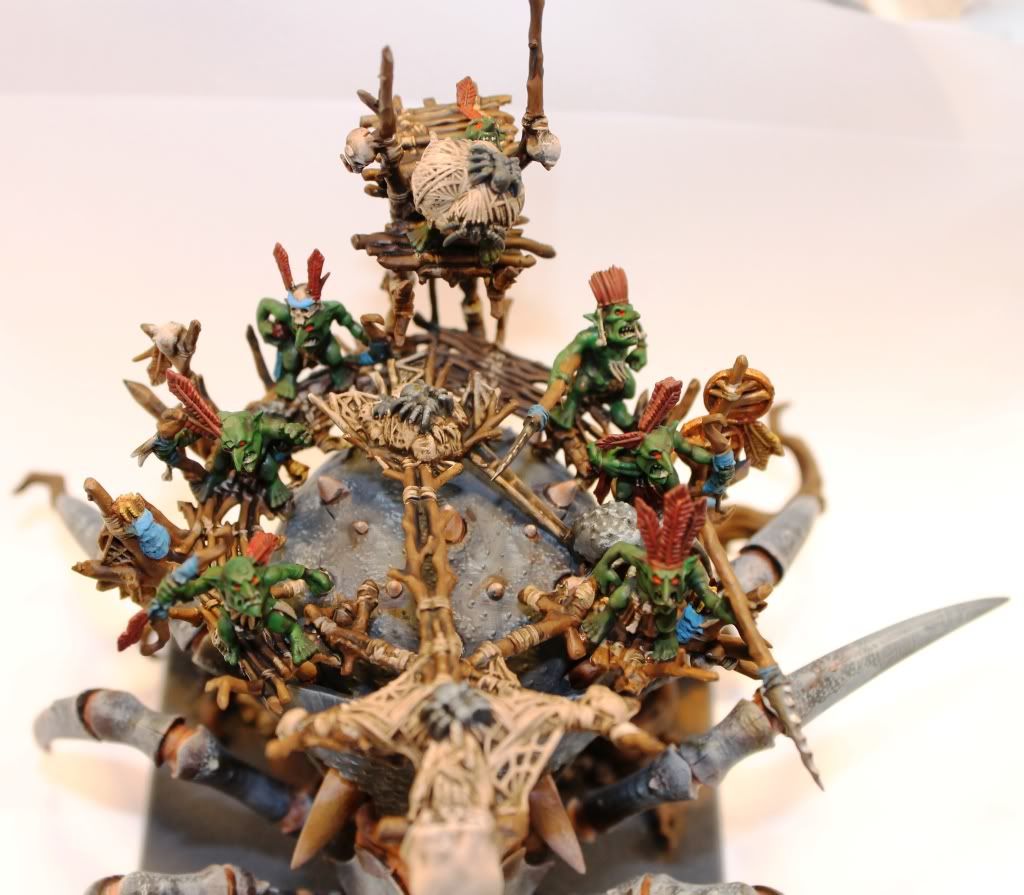
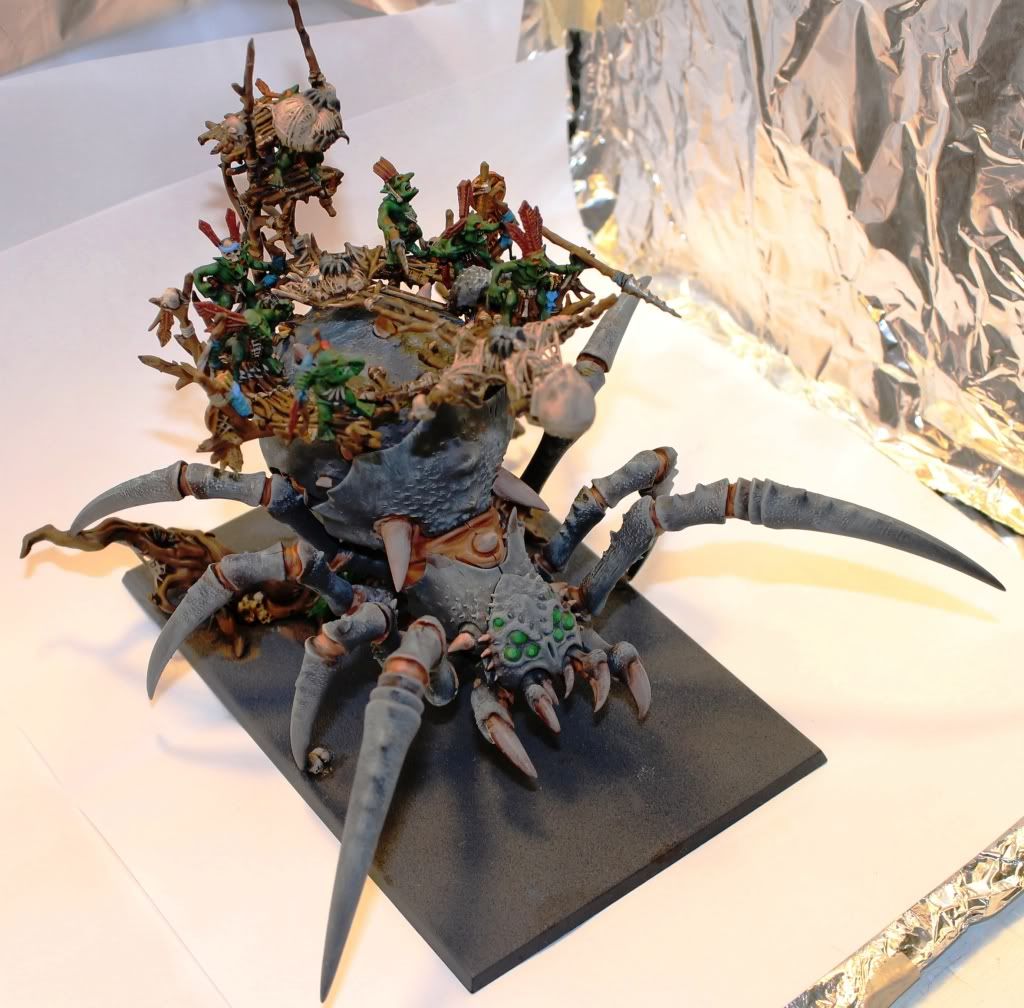
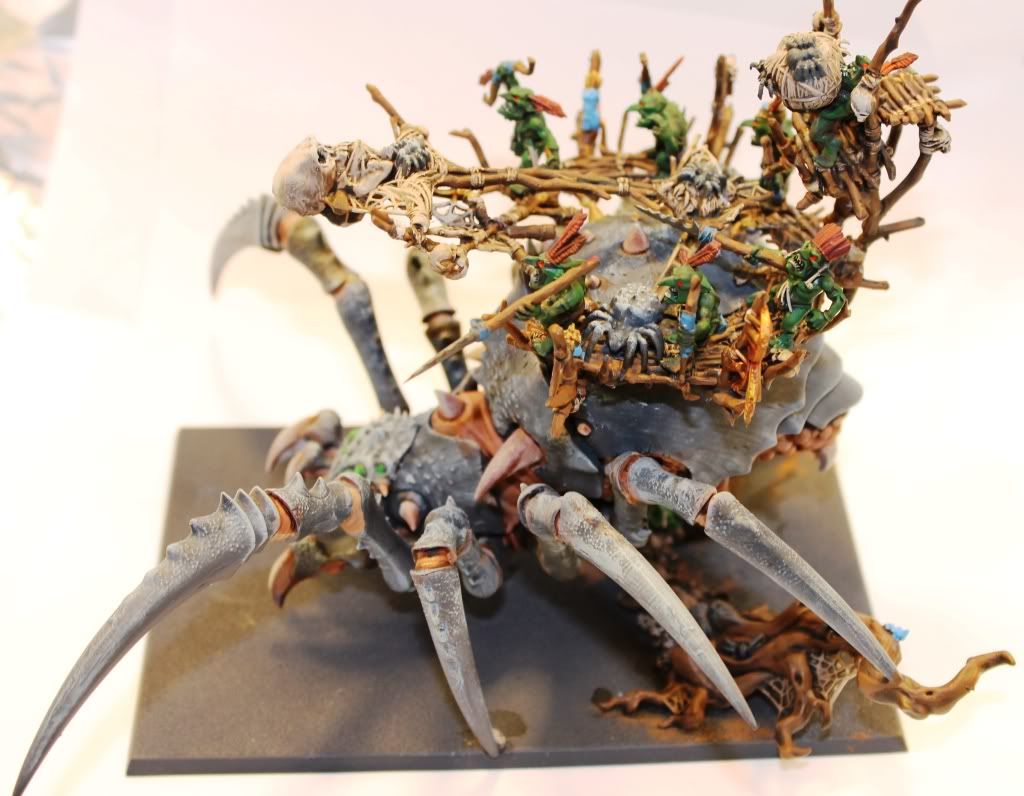
Arachnorok Spider Painted!


I assembled and painted the Arachnorok for a friend, in exchange for some Wood Elf and High Elf miniatures, and because it was a lot of fun and a challenge to do so.  The spider is fun to put together, while the Howdah itself is a bit tricky.  Painting the whole thing was a ton of fun, and I spent a lot of time on the little details throughout the model.  I've added a few more details since these pictures, such as painting the spiders in the Arachnorok's underbelly.  The basing has been left off so that my friend can match it to his O&G army.  Overall, I'm very pleased with the results, and hope he is as well. 

Wednesday, June 8, 2011

Tavern Talk - Painting; Beginners and Beyond


For Tavern Talk, Kuffy asked:

A new starter to the hobby has approached you, their army has been selected (insert your own preference if needs be) and rather than ask you questions about how to game or army composition they instead ask you about painting.  Your reply is....

Basically, what tips would you give to a new starter in the hobby.  Everything from paints, to basing.  What are your top tips?  


There's a ton of great practical advice that one could give a new painter.  You should always clean your brushes.  Don't prime when it's humid.  Water down your paints.  Don't wear your good clothes while painting.  Even someone who has only been painting for a few months could drown a new painter in a flood of tips, tricks, and techniques.  If I had to give only one piece of advice, however, it would boil down to four simple words.

You will get better.

The first models you paint might be poor, or they might be great, but they won't be as good as the models you paint six months from now if you practice.   Paint a little every day, even if just for a few minutes, and watch as your skills slowly but surely improve.  It might be that your learn new skills and techniques, or that you gain the painting "muscle memory" that you'll hear about, but it all comes down to the fact that your painting will get better and better as time goes on.

It might not seem like you're getting better sometimes, and you may plateau for a bit, but then you'll suddenly see great improvement.  Sometimes you'll have "Ah Ha!" moments or big jumps in your skill, and other times you'll make steady progress.

So don't give up.  Keep on painting, and you will get better.

Oh, and try out a wet palette sometime.  Those are neat.

Wednesday, June 1, 2011

On Painting Scores in Miniature Gaming Tournaments, Part III


Links to Part I and Part II.

.Part III:  Judging Paint Scores

Now that you've settled on the weight you'll give your painting scores, you'll want to find an effective way to judge those scores.  There are several ways to go about doing so, but I believe that some are better than others.  

The first issue to deal with is whether or not to judge your players painting on a "soft" scale, or whether to use a checklist.  A "soft" scale allows the judge to assign a score to each player's army, say from 1-10.  These numbers are not defined, but rather based upon the judge's feelings as to the relative standing of each army at the tournament in terms of painting.  A checklist system is more prevalent, such as the one here for the Colonial GT (scroll to the fifth page).  This provide points for different aspects of painting and modeling, such as shading, highlighting, conversion, and the like.  

The second issue to deal with is whether players will judge their opponents painting scores or your and/or other judges will do so.  Players can do a good job of judging their opponents army, as they spend some time really looking at it, but you'll also run into the problem of players who will mark their opponents down in terms of painting in order to knock the other player down in terms of overall score.  Judging painting yourself and/or with neutral judges is more work, but should reduce the threat of bias and people gaming paint scores.  

I would personally suggest using a checklist to judge paint scores and not having other players do the judging.  This should eliminate the randomness of "soft" paint scores, as well as the bias of having players judge.  I also highly suggest using multiple judges (two or three) rather than using a single judge.  Use the scores that these judges provide in an average to get your paint score.  This will eliminate the problems of a kind of Rashomon effect for painting.  Even with a checklist, two different judges can and will get significantly different results for the same army, and averaging these scores out will allow for better, more accurate scoring.  Recruit a friend, a spouse, or a store owner, and get to judging!

Okay, so hopefully these articles have been fun and informative, and I hope that they have been helpful to any T.O.'s present and future as well!  Thoughts and questions are appreciated!

Monday, May 30, 2011

On Painting Scores in Miniature Gaming Tournaments, Part II


I started discussing painting scores in Part I, where I discussed the positives and negatives of painting scores in general in war game tournaments.  Here in Part II, I'll discuss my thoughts on where and when painting scores are best implemented and the varying weights painting can be given.  Tomorrow in Part III, I'll talk about paint judging and how best to effectively score painting in your tournament.

Part II:  The Where and the Weight of Painting Scores
You could sum up the entirety of my first post by just writing "know your audience and know yourself".  Thus, the two most important factors when determining whether you should consider when creating your tournament and implementing (or not implementing) a painting score are "What are my players looking for?" and "What am I looking for?"

For store owners/managers/employees running tournaments, providing a venue for new players to participate might be something important to emphasize.  Thus, I've found that stores are more likely to forgo painting requirements in favor of pure battle scores.  Likewise, if  you're running an event to introduce new players into the hobby and game, ignoring paint scores and requirements might be the way to go as well.

On the other end of the spectrum, individually run tournaments, especially the two day affairs, will most likely appeal to veteran gamers, and very often contain painting scores and requirements.  While there are a few that do not, those tournaments are target towards the "playing only" group of hobbyists, and are in the minority for many game systems.  

If you've decided to use painting scores, there are different ways to go about doing so.  If you'd like to reward painting without punishing you "playing only" group, a great way to go about doing so is to award a separate prize for the best painted army, while keeping those painting scores completely separate from the battle scores and overall prizes.  Otherwise, you'll want to figure out just how much you'd like painting scores to matter in terms of overall score.  More "hardcore" tournaments might contain painting as a small component of overall score, while soft score oriented tournaments might have painting as more than thirty percent of the overall. 

I've found that the best way to go about calculating the effects of painting score is to look at your battle scores first.  Figure out how many battle points a player can potentially earn in a day of tournament play, and then work out how many points painting should count as from there.  For instance, if you're running a five game tournament, and players can earn up to one hundred points from battles (twenty points per battle), you might decide that you want painting to be worth about the same as one battle, and award up to twenty points.  Depending on your emphasis, go higher or lower!

See you tomorrow to discuss judging!

Friday, May 27, 2011

On Painting Scores in Miniature Gaming Tournaments, Part I

Well, not that kind of tournament painting

Over the past few days, I've been attempting to gather my thoughts on painting scores in miniature game tournaments, specifically Warhammer, into a cohesive mass.  Soft scores in general, and painting scores in particular, are some of the most contentious parts of the Warhammer tournament scene, so I believe that they deserve a good bit of thought.  I'd love to hear your opinions and thoughts as well.  I'd also like someone to actually show  up to a tournament painted as in the picture above.

Part One - The Advantages and Disadvantages of Painting Scores in Warhammer Tournaments


Painting scores in tournaments offer both positives and negatives to players and tournament organizers, and those factors have to be recognized in order to determine if an event should or shouldn't use painting scores. 

The main argument that I often hear for including painting scores in tournaments is that war gaming is a hobby, which consists both of playing miniatures and painting and modeling those miniatures.  Certainly, the miniature companies push this idea of a "complete hobby", as they produce paints, brushes, and modeling tools along with their models.  Games Workshop in particular seems to emphasize this model, using heavy painting scores in their own Throne of Blood tournaments and providing a magazine that heavily features well painted models and tutorials on painting.

While I personally fall into the "complete hobby" category, and really enjoy painting, there are many people who have an equally valid hobby of playing war games, and either having no interest in the painting side of things or seeing painting as a less enjoyable and important side effect of the hobby.  From their perspective, playing Warhammer is similar to playing other games.  A couple hours of playing Portal 2 on the XBox doesn't require one to slap a coat of paint on the console, so why should playing a miniature game?

A second, less used but in my opinion more interesting argument for the inclusion of painting scores is the idea of immersion.  I once had a tournament organizer argue to me that he had players coming in from around the country and from other countries to play in his tournament, and his responsibility to those players was to provide the very best experience possible for them to participate in.  This included visually appealing games, both from himself as a TO in term of terrain, and from other players in terms of painted armies.  Many players enjoy games on an aesthetic or, for lack of a better term, "fluffy" level, and nothing jars those sensibilities harder than gray or primed plastic, metal and resin across the table.

 This picture, for example, wouldn't be as neat without any color.

There are also several valid arguments for passing on painting scores in your tournament.  Painting is an arduous and disaster filled learning experience for newer players, and there are already many factors such as cost and assembly that make war gaming (and especially the bigger games like Warhammer) intimidating to new players enjoying the hobby.  The idea that players need to buy and assemble two hundred or more models before playing is scary, but then add the idea in that they'll need to spend several months painting before being allowed to show up and play on a Saturday tournament, and you'll turn off many new and aspiring players.  The counter to this argument is that in requiring or heavily rewarding painting at tournaments, new players will be drawn in by the good looking armies on the table, and will want to join in on the fun of the complete hobby. 

Painting scores may also eliminate or discourage highly skilled players who aren't as skilled at painting or who paint differently from your painting score system from attending your tournament.  Often, the argument is that the winner of of a tournament should be the player who performed the best by winning the most games in the tournament.  This, in my opinion, can be resolved by offering a "Best Overall" prize which includes your soft scores and a "Best General" prize which does not.

 Sometimes, you just want to smash your opponents.

So, in preparing a tournament, I believe that one should look at all of these arguments, and then determine the best way forward in order to both promote your beliefs and ideas as a TO and to reach out and provide the best possible experience for your target tournament audience.  Are you personally promoting the "complete hobby" or just the game?  Are you aiming to provide a great looking experience or provide a more 'Ard Boyz style experience?  Are you aiming to include many newer players, such as in a smaller "newbie" tournament?  Who are you targeting as your potential player base for the tournament?

I hope you've enjoyed these initial thoughts, which lay the foundation for further parts of this argument on Monday and Tuesday of next week.  On Monday, I'm going to look at different kinds of tournaments and my personal opinions on when painting scores are appropriate as well as why I believe that is true, as well as weighting painting in relation to battle scores and other soft scores.  On Tuesday, I'll look into paint judging, different ways of scoring painting, and opinions on how to approach actual implementation of paint scoring in tournaments.
Tuesday, October 26, 2010

The Assembly Line (or how to paint 100 Gors at once)!


A few weeks ago, I decided I really didn't like my Beastmen paint scheme.  My army is flesh and brown with green leather...it's a fairly typical GW Beastman paint scheme, and maybe that's why it didn't appeal to me.  I've also gotten really tired of working with my homemade snow, as it's a pain in the butt.  So I'm stripping down my models, and repainting like a fiend.

For some awful reason, I decided I'd paint my one hundred Gors first, so as to get them done.  The basic scheme was to have regular flesh, orange fur, and purple paints, a la your hero and mine:


Well, maybe not quite so orange.

So I lined 'em up, and got to work.  Each model got one of each coat as I went through.  The basic process went:

1.  Flesh
2.  Orange fur
3.  Silver Metal (weapons and such)
4.  Brown woods
5.  Off white horns, hooves and bones
6.  Purple leathers
7.  Bronze for the ornamentation.
8.  Red Eyes
9.  Flesh Wash
10.  Sepia Wash
11.  Face Paint Details

It's been some madness, but I've finished with step nine at this point, and am on the home stretch.  It's been three weeks, give or take, painting about two evenings a week while my Mrs. watches television or works on her work.  I'm lucky enough that I have a temporary painting area set up nearby.  

With this many models, you have to be able to sit down and make yourself paint.  Having something else going, such as a conversation or television show, is also crucial to getting through everything.  I suggest trying to do a coat on all of your models at once, as when I split it up I didn't feel like I had made any progress, and didn't want to come back to painting. 

So yeah, pictures should be up by the weekend.  Hope you enjoy them!

Thursday, June 3, 2010

Oh So Yellow!

The process of painting my Imperial Fists has had its ups and downs, but nothing has been quite so arduous as the tanks.  My goal with the Fists was to have each of them look smooth.  Most yellow I see is streaky and often times the base coat shows through.  I wanted to do my yellows right, and while they're not flashy, I have had very good luck getting things nice and uniformly colored.

The tanks I'm currently working on, though, are really taking some effort.  Coat after coat is going on, and progress is being made, but getting perfect yellow on large, flat surfaces is really a trick.  Thank goodness for Foundation paints, eh? 

One of the articles I read recently on the GW website mentioned painting a White Scars Land Raider with sponges.  Does anyone have any experience with this method?  I have a Land Raider myself to do next!

Tuesday, April 6, 2010

Painting Easy, Good Looking Black


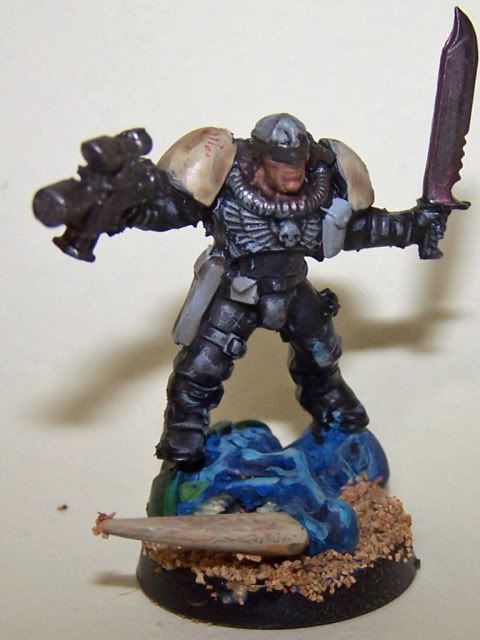
This is Scout Sergeant Asad of the Raven Guard.  When I played a lot more 40K, this was the one guy who would always perform crazy feets of dicemanship.  He killed Abaddon once, stabbed a Hive Tyrant to death, and in one game alone killed two squads of three Obliterators after the rest of his squad was wiped out, and then blew up a Chaos Land Raider for good measure.  He's blindfolded in order to give the enemy a chance.

Anyway...

When I was first painting, painting a decent black was something that was a real challenge, and it was one of the first challenges that I wanted to work on as a painter.  I like to paint efficiently and actually finish painted armies to play the game with,  so this isn't an eighteen step method for 'Eavy Metal, but it works really nicely for me.  So, here are the steps:

1.  Prime Black.
2.  Base Coat with Charadon Granite.
3.  Generally highlight with Adeptus Battlegrey.
4.  Extreme highlight with Astronomicon Grey.
5.  Wash with Badab Black to mute the higher greys. 
6.  Pick out the details!

You can get a nice looking batch of models done this way, and do so in good time.  It's a simple technique, but it will get your plastic and primed models painted for the table, and that means that like Sergeant Asad, they'll perform a heck of a lot better!

Wednesday, March 24, 2010

Get Your Models Painted!


I paint fast, and I paint pretty well (at least to my eye, most days).  Despite not having a whole lot of free time, I manage to get projects done.  So for all of you stuck in procrastination land, fielding wave after wave of gray plastic miniatures, here's ten tips I used to get my models painted efficiently.

1.  Set time aside for painting.  Even if it's only ten minutes in a day, just setting aside a few minutes to get that first base coat of paint down on some models makes all the difference.

2.  Don't be afraid to make mistakes.  You shouldn't be working towards steely eyed, no quarter perfection on your first pass.  You can go back and fix things later.   That being said....

3.  Don't be intentionally sloppy, either.  Paint whatever part you're working on, and move on.  Don't hose down the model with paint.

4.  Have your paints ready.  I believe in the wet palette, which is a popular and approved way of working quickly with paints.  I also believe in pre-watering my paints in the jar, which is frowned upon by a lot of people.  It works for me (as long as I'm careful to not accidentally make a wash) and allows for quick access to lots of colors.

5.  Use washes.  Nothing makes a good model great in record time like using washes.  Instead of using six layers of paint to shade and highlight one of your six hundred rank and file models, try hitting it with a wash and then highlighting.

6.  Have brushes for every job.  I've got the general big three, and their names are Big, Medium, and Tiny.  One does the base coating, the next the general work, and the third the very fine details.

7.  Work in tens.  For your rank and file, use groups of five to ten (depending on your taste) to get things done.  One goblin at a time won't cut it for getting your army painted on the table.  Doing eighty at once may burn you out.  Small groups allow for progress while giving a good sense of accomplishment.

8.  Distract yourself.  Listen to music, or have a movie on, or try a new podcast.  Let your mind wander and you'll be amazed at the work your hands get done.

9.  Have your tools organized and cleaned.  Don't put yourself in a situation where in order to get any painting done, you have to look for your brushes and paints, etc. for half an hour.  Organize a bit, man!

10.  Have fun!  The day that the hobby becomes a chore, you need to pull back.  Relax, have fun, and make painting something you're having a great time trying to improve in.